My colleague, Jarad Lucan (who just won a New Leader of the Law award from the Connecticut Law Tribune!) returns today with a post about the protections employees who testify in court may have. 

Lucan_J_WebMost employers (at least those employers that read this blog on a regular basis) know that it is illegal to

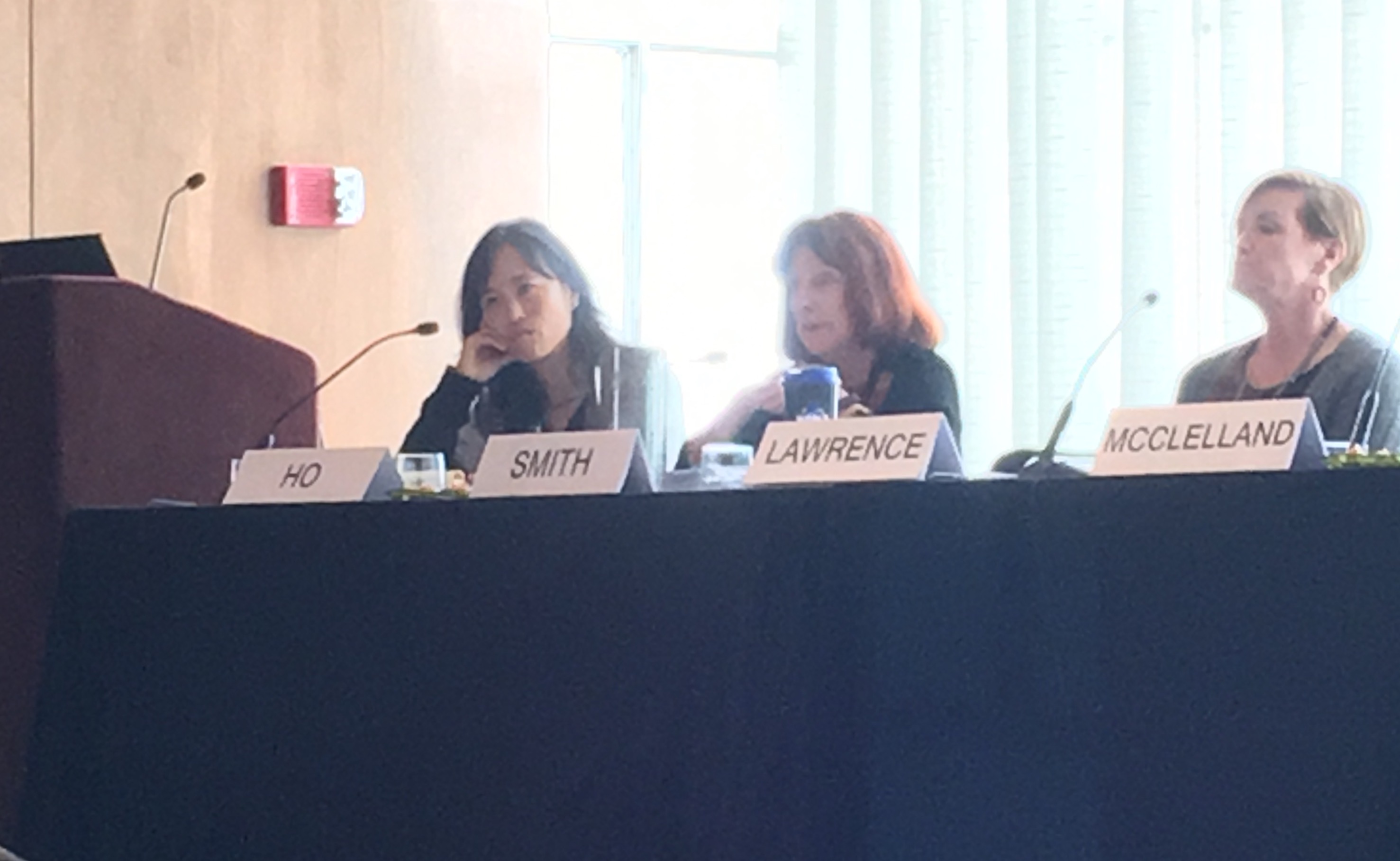
USDOL Solicitor Smith speaks at ABALEL conference

Over the next few days, I hope to provide a few updates from attending last week’s ABA Labor & Employment Law Annual Conference in Philadelphia.  There were many good, substantive programs there and lots to be gleaned for employers.

One of the sessions focused

Kind of ironic that the ABA Labor and Employment Law Section Conference is in Philadelphia this week.  After all, one of the most famous employment law movies is, in fact, “Philadelphia” with Tom Hanks.

Alas, Tom is not scheduled to appear at the conference.  However, for better and/or worse, I will.  In fact, I’ll be

yankees-300x300On Friday, at my firm’s annual Labor & Employment Law seminar, I’ll be talking about the NLRB and Employee Handbooks with my colleague, Chris Engler.  Among the topics we had planned to discuss was the ongoing Triple Play Sports Bar & Grille case that I had previously posted about here and here.

So of course yesterday, the Second Circuit released an long-awaited decision on that very case. And it’s a strikeout for the employer.

The case involves a mix of old and new concepts. Old: Employees have the right to improve the terms and conditions of their workplace — so called “Section 7” rights to protected concerted activity under the National Labor Relations Act, even if they are not “unionized”.  New: It applies to Facebook and other types of social media.

And now, even to Facebook “likes”.

In the case, Jillian Sanzone and Vincent Spinella, two employees of Triple Play Sports Bar and Grille, located in Watertown, discovered that they owed more in State income taxes than they had originally expected. One of the employees discussed this issue with co-workers, and complaints were made to the employer.

The discussion continued on Facebook, and a former employee, Jamie LaFrance, posted the following “status update” to her Facebook page: “Maybe someone should do the owners of Triple Play a favor and buy it from them. They can’t even do the tax paperwork correctly!!! Now I OWE money . . . W[*]f!!!!”Continue Reading Employer Strikes Out; Facebook Likes Protected by NLRA, Says Second Circuit

Confession: Back to the Future is my favorite movie (though ask me in two months and I’ll probably say it’s actually Star Wars — employment lawyer’s prerogative).

So, how could I let “Back to the Future” day pass without an employment law-related post!

For those (strange) people who don’t know what I’m talking

Polo Ralph Lauren's agreement is online
Polo Ralph Lauren’s agreement is online

One of the little facts that’s not widely known is that the SEC typically publishes all sorts of executive employment agreements for publicly-traded companies.  They’re ready and available for download.

Why might the average person do that? Well, for one, these agreements can sometimes contain

crybabyThe Connecticut Law Tribune reported earlier this month on a new Connecticut Supreme Court case that, for the first time, allowed claims brought by kids to proceed based on injuries suffered by their parents.

Plaintiffs’ lawyers have a new weapon in their arsenal. The state Supreme Court, in a split decision, has ruled that Connecticut

secretsEarlier this month, The New York Times ran another column in its Workalogist series that asked the following question:

Are conversations with a human resources department confidential? I’m contemplating retirement in about three years and would like to gather benefit information from human resources now — but I do not want my supervisor to know.

microphoneIn yesterday’s post, I alerted you to a new Connecticut Supreme Court decision (Trusz v. UBS Realty Investors, LLC) that expanded employee free speech rights under the Connecticut Constitution.

But I wanted some time to think about the answer to the following question: How much did the court expand it?

And to