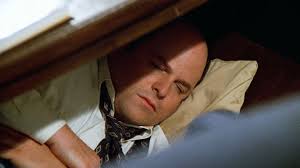
In a classic Seinfeld episode, George Costanza once built a bed under his desk at Yankee Stadium so he could nap during the workday.

But note to future employees: Sleeping on the job can (and probably will) get you fired on the job and the courts can (and likely will) dismiss a lawsuit against the

The Second Circuit issued a decision yesterday that reinforces a principle employers sometimes forget in the accommodation process: doing something is not the same as doing enough.

In Raymond v. 1199SEIU National Benefit Fund, the court vacated summary judgment for the employer on an ADA failure-to-accommodate claim. The employee had a vein condition that

My colleagues and I published a detailed breakdown this week over on the Employment Law Letter of the Second Circuit’s new framework for religious accommodation claims under Title VII. The short version: the court has replaced the familiar “notice plus adverse action” prima facie test with a motive-based inquiry drawn from the Supreme Court’s 2015

The Connecticut Appellate Court officially released a decision this week that provides some useful (if straightforward) guidance for HR professionals and employment lawyers in the state. In Hanke v. Electric Boat Corp. (officially released April 7, 2026), the court affirmed summary judgment in favor of the employer on all three counts — disability discrimination

Here’s a scenario that’s becoming increasingly common in HR departments across the country: An employee is struggling with performance issues. After working with them and providing coaching, the employer decides to put them on a 60-day performance improvement plan (PIP). It’s a reasonable step – giving them a clear path to get back on track.

The rules on accommodations just changed for employers — at least in Connecticut and New York (and Vermont too).

The Second Circuit (which covers Connecticut, New York and Vermont), in an important decision released last week, expanded the situations in which an employee can get an accommodation holding that such accommodations may be required even

The latest episode of “From Lawyer to Employer”, a Shipman podcast that I’m hosting this season, is now live and it’s all about accommodations and leaves in the workplace.

What we try to tackle, however, are the more challenging or unusual accommodation requests that employers sometimes get. Accommodating someone who is restricted in their

For HR professionals and employment lawyers, the basics of FMLA and ADA is an oft-covered topic in law firm webinars.

But I’ve heard from plenty of people that they’re good with the basics; it’s the tricky issues that give them headaches.

With the acknowledgement that one person’s difficult question may be another person’s easy one