A new trend is appearing in HR offices and legal departments across the country: Employee complaints and legal documents that seem professionally written but show clear signs of being created with generative AI.

I’m not referring to employees getting legal advice from ChatGPT (which, as of this week, ChatGPT itself says it shouldn’t be used

With a college graduate in the family, I’m hearing first hand of the trials and tribulations of the current job market.

One of the items that I hear and read about, is the rising use of AI tools for screening and hiring.

There’s a big hole right now in regulation of this practice, with just

Season 4, Episode 2 breaks down what employers really need to know

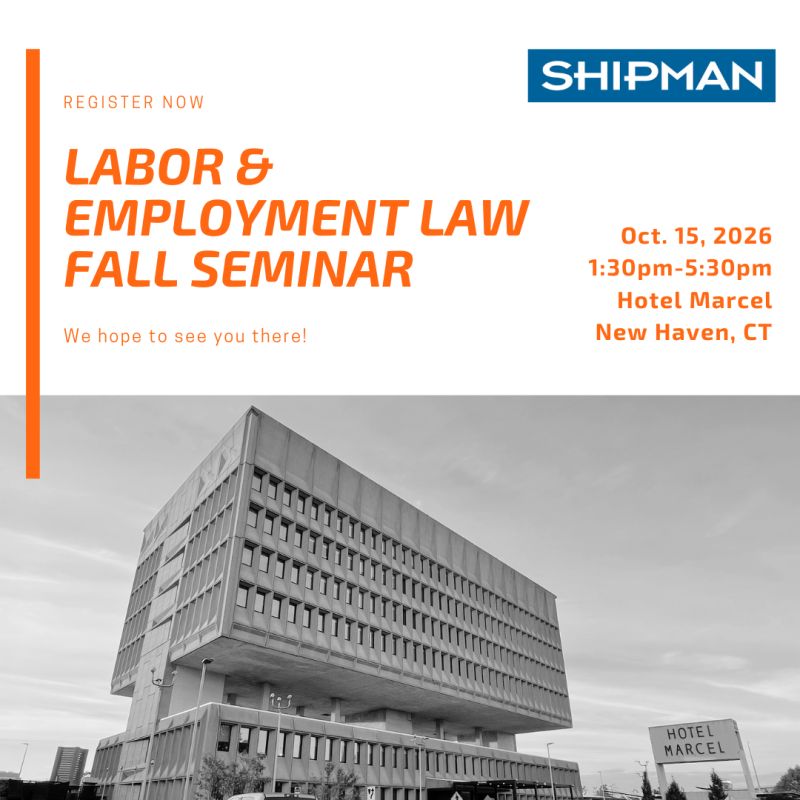
In our latest From Lawyer to Employer podcast episode, I sat down with my colleague Sarah Niemiroski to tackle one of the most requested topics from our recent fall seminar at Hotel Marcel: Connecticut’s increasingly complex web of leave laws.

If you’re

I recently learned about a company planning an active shooter drill that made my jaw drop. Their plan? Stage a hyper-realistic scenario with fake guns, fake blood, actors playing attackers, and here’s the kicker: don’t tell employees it’s a drill until after it happens. The thinking apparently is that this will give employees the “most

Earlier this week, I presented “Leave it to the Lawyers: Navigating the Maze of Employee Leave Laws” at our firm’s Labor & Employment Fall Seminar at Hotel Marcel. Along with my colleagues Sarah Niemiroski and Claire Pariano, we tackled the alphabet soup of FMLA, CT FMLA, PFMLA, PSL, and ADA requirements.

It was so

Last week, I talked about how smart arbitration drafting allowed the company to recover its attorneys fees in successfully defending a claim by a former CEO. But there’s another lesson from Golden v. WorldQuant that company should know: how four simple words in a termination letter can save employers from a legal trap.

The Post-Termination

The Connecticut Appellate Court just released Golden v. WorldQuant Predictive Technologies, LLC, and while the decision covers several arbitration issues (more on another one of those in a future post), there’s one lesson that should have companies reviewing their arbitration clauses: a well-drafted attorney fee provision can be the difference between winning and actually

A new case officially released today by the Connecticut Appellate Court Begley v. State, won’t revolutionize employment law, but it’s a useful reminder of how retaliation claims can fall apart when the factual foundation crumbles. For employers facing retaliation allegations, this case illustrates exactly what plaintiffs need to prove — and what happens when

Sometimes the dog days of summer produce more than just wilted flowers and overpriced iced coffee. Here are five developments worth watching as we head into fall.

I’ve been sitting on my hands for weeks, wanting to write about somethinganything — happening in employment law. The truth is, there just hasn’t been one

Here’s a scenario that’s becoming increasingly common in HR departments across the country: An employee is struggling with performance issues. After working with them and providing coaching, the employer decides to put them on a 60-day performance improvement plan (PIP). It’s a reasonable step – giving them a clear path to get back on track.