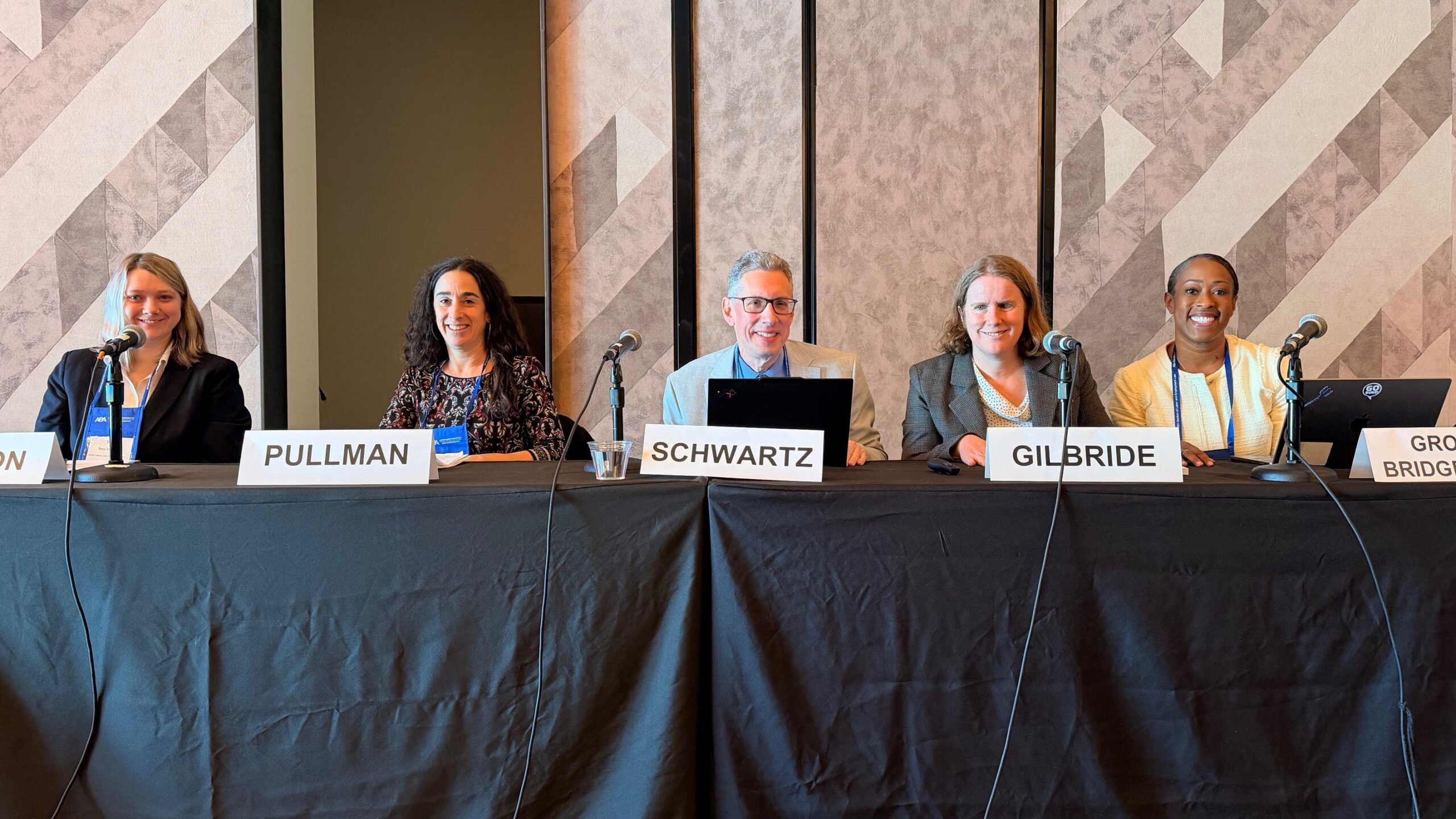
Last week, I had the privilege of speaking at the ABA Section of Labor and Employment Law’ Employment Rights and Responsibilities Midwinter Meeting on a topic that has been a recurring theme on this blog for nearly two decades: “Bostock, Executive Orders, and the Evolving Framework for Gender Identity Discrimination.”

Our panel featured an outstanding

While I was attending the ABA Board of Governors meeting last week, the Supreme Court issued a decision in Ames v. Ohio Department of Youth Services that received outsized coverage given it’s relative minor impact to employers in the Constitution State.

So what did the Court hold? In a unanimous ruling, the Supreme Court struck

Twas the day before the night before Christmas
And all thru the law office
Not a creature was stirring
Except the employment lawyers reading the new Congressional Omnibus spending bill and looking for the employment law provisions tucked neatly inside.

In a parting gift for employers and employees, Congress passed a broad spending bill on

In some prior posts here and here, I talked about the development of artificial intelligence tools in the employment law context.

If you’ve been reading the headlines, the latest AI “tool” is a Chatbot titled “ChatGPT”.  You can read the latest The New York Times piece about it here.

In this context, it can

Back in October, I provided a preliminary assessment of what a COVID-19 vaccine might mean for employers.  But as I noted back then, the EEOC’s guidance was not yet updated.

Now, the EEOC has finally provided an update of sorts for employers.

In doing so, the new guidance makes plain what many of us suspected

We are still several months away from a vaccine for COVID-19, and probably still even further away from one that will be readily available to the general population.

But I’ve already heard grumblings from employers wondering — can I compel employees to get a vaccine when one is available for the coronavirus?

It’s a

The U.S. Supreme Court today ruled that the “ministerial exception” that bars some employment discrimination claims against religious institutions, also bars such claims by elementary school teachers at private Catholic schools.  The case further clarifies an exception that came to prominence back in 2012 and expands the reach of the exception.   I noted then

In the most consequential U.S. Supreme Court case in many years, the Court ruled this morning that Title VII prohibits employment discrimination on the basis of sexual orientation or gender identity.

You can download the 6-3 decision in Bostock v. Clayton County, here.

Connecticut has long prohibited employment discrimination on the basis of sexual

Over the last several months, I’ve been asked to do far more sexual harassment prevention trainings than typical and the issue of profanity in the workplace has popped up.

No doubt that much of this is due to the recent spate of cases of very public sexual harassment and assault cases (Thank You Matt