A recent Connecticut Appellate Court decision should raise the eyebrows for every employer in the food service and hospitality industry. The case, Gentile-Riaz v. Samo Thraki, LLC, officially released last month, allowed a retaliatory discharge claim to proceed when an employee complained to a municipal health district about unsanitary conditions at her workplace. While

A new episode of our podcast, From Lawyer to Employer, just dropped and this one is for all the employers with workplaces in Massachusetts.

With Shipman & Goodwin’s expansion to a new Boston office, I’m joined by my colleague Jarad Lucan to talk about the latest developments in employment law in the state.

We talk

Yesterday, the Equal Employment Opportunity Commission took a significant step when it voted two-to-one to rescind the comprehensive anti-harassment guidance that had been finalized in April 2024. The guidance, which updated the agency’s approach to workplace harassment for the first time in twenty-five years, was eliminated by the commission’s new Republican majority without a public

Connecticut’s wage‑range disclosure law has settled into the hiring routine—but there are a few 2025–2026 reminders worth folding into your process.

Remember: Coverage is broad. Any employer “within the state using the services of one or more employees for pay” is covered, and the law applies to remote applicants applying to a Connecticut employer, even

A few weeks ago, I came across a new class action lawsuit filed against a national delivery service. The case involves a simple issue: the company allegedly failed to pay an employee their final wages promptly after termination.

Allegations in the Lawsuit

The complaint states that the employer paid the employee by direct deposit three

For many years, I’ve made predictions on what I think may happen for the upcoming year.

Some years, it was pretty predictable.
But, to state the obvious, we’re living through some unpredictable times. Changes at the federal level have come mainly through executive orders and changes in enforcement priorities. It’s been many, many years, since

The Second Circuit Court of Appeals recently clarified the transportation worker exemption under § 1 of the Federal Arbitration Act (FAA). The court addressed whether contracts signed by individual delivery drivers, even when they work through their own corporations, count as “contracts of employment” that are exempt from mandatory arbitration. In this instance, the court

Yesterday, I talked about the obligations that employers have to preserve data. But let’s switch gears; in an employment discrimination claim brought against a company, an employee’s AI usage is fair game for discovery.

And by not asking for it in litigation, you just might be missing out.

ChatGPT alone has over 700 million weekly

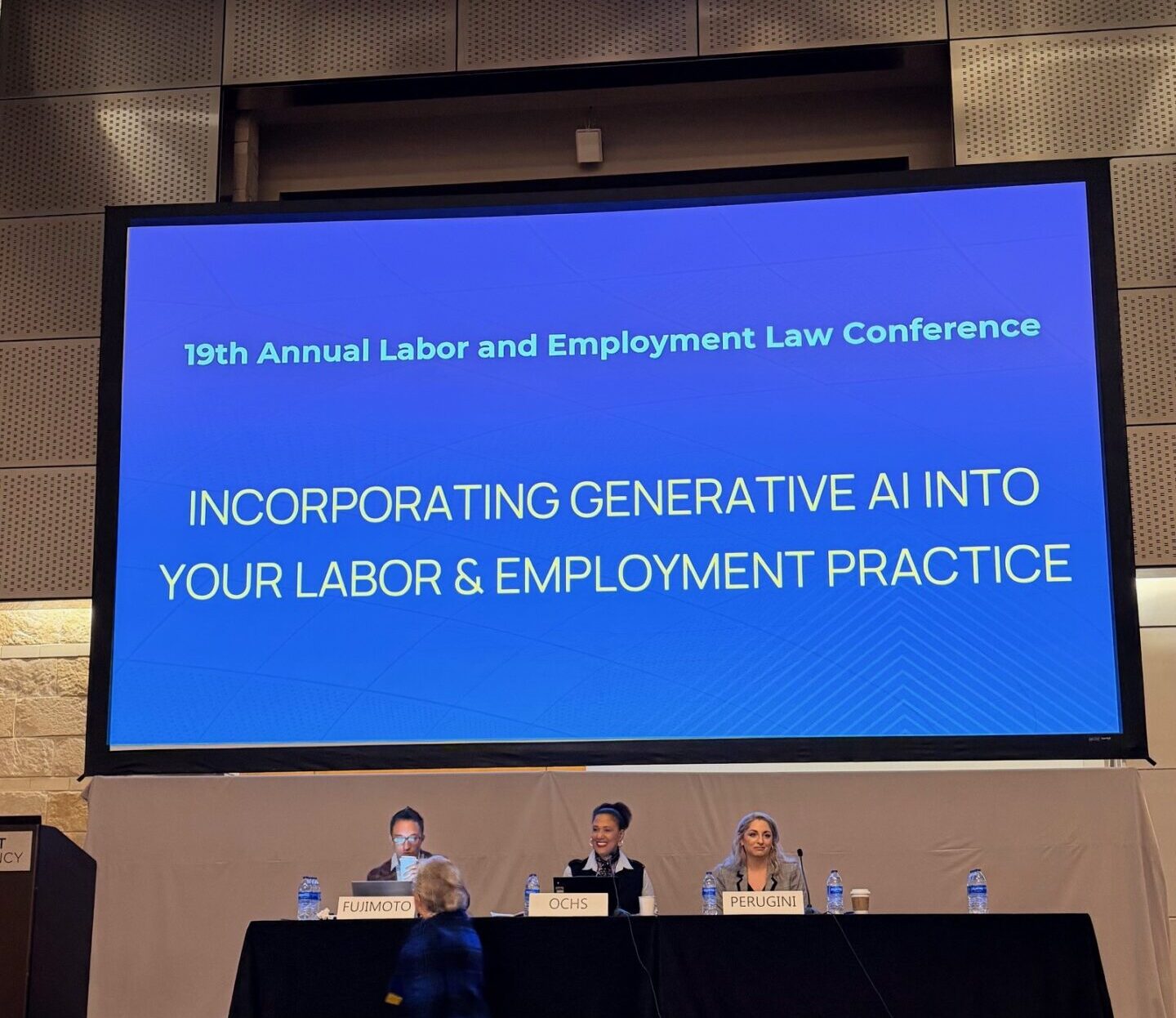
I recently got back from the American Bar Association Annual Labor & Employment Law Conference — an event I’ve talked about before on this blog.

There were a number of great CLE programs — far too many to list. Not surprisingly, Generative AI remained a hot topic and the sessions caused me to continue to

The Connecticut Appellate Court issued a ruling that employers need to understand when dealing with pregnant employees. The case, Long v. Town of Putnam, reversed summary judgment for the employer and remanded the case to trial.

According to the court’s opinion, Cassie Long was hired as Assistant Finance Director in June 2019. On her